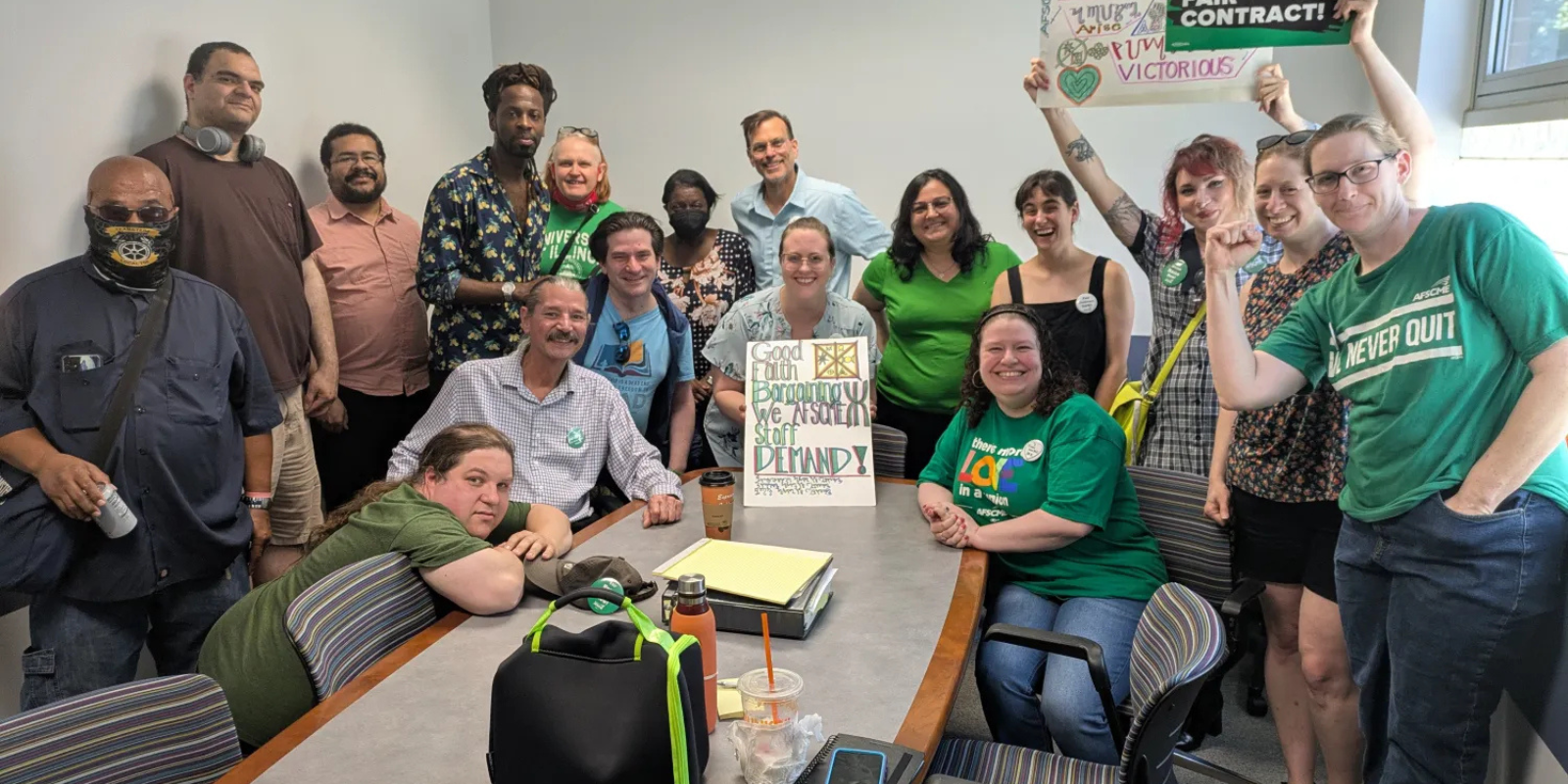
CHICAGO – When members of AFSCME Local 1989 (Council 31) at Northeastern Illinois University entered contract negotiations in 2024, they didn’t think management respected the important work they do.
Many NEIU employees have worked there for years, even decades.
“I’ve been around NEIU since 2002,” Local 1989 President Mary Serio said. “I know this university, I know the issues the students go through.”
Union members had a plan to turn up the pressure on management. In February, they set up a table in a heavily trafficked part of the university with a giant Valentine’s Day card to get the attention of university President Katrina Bell-Jordan.
AFSCME members, students, faculty and other campus workers were among the dozens of people signing the colorful card, which read, “Love is a Fair Contract.”
Next, local union members marched into Bell-Jordan’s office to deliver the card.
“The message we sent was that we are important to the life of this university,” said Criage Althage, a library specialist and member of the union bargaining committee. “This helped us show that management was holding back the progressive change we were demanding.”
In the contract ratified by members in July, they made significant gains on several fronts.
One of the biggest fights during bargaining was over parental leave. The bargaining committee succeeded in tripling the amount of leave that members are entitled to after the birth or adoption of a child.
Members also won improvements to bereavement leave and extended tuition waivers for workers who may be laid off so they can continue their education.
The new contract raises wages by 12% across the board over four years. The members also won the right to a pool of equity money totaling $415,000 to be distributed by mutual agreement throughout the bargaining unit over the life of the contract.
“Some people are going to get some life-changing raises as a result of this contract,” Serio said. “That means a lot to a lot of people.”
The NEIU contract victory underscores the union difference. It also highlights a key advantage of workers forming unions — they gain a collective voice on the job to advocate for better working conditions and more resources for the communities they serve.