50,000 Workers Strong! AFSCME Cultural Workers United Hits 5-Year Milestone

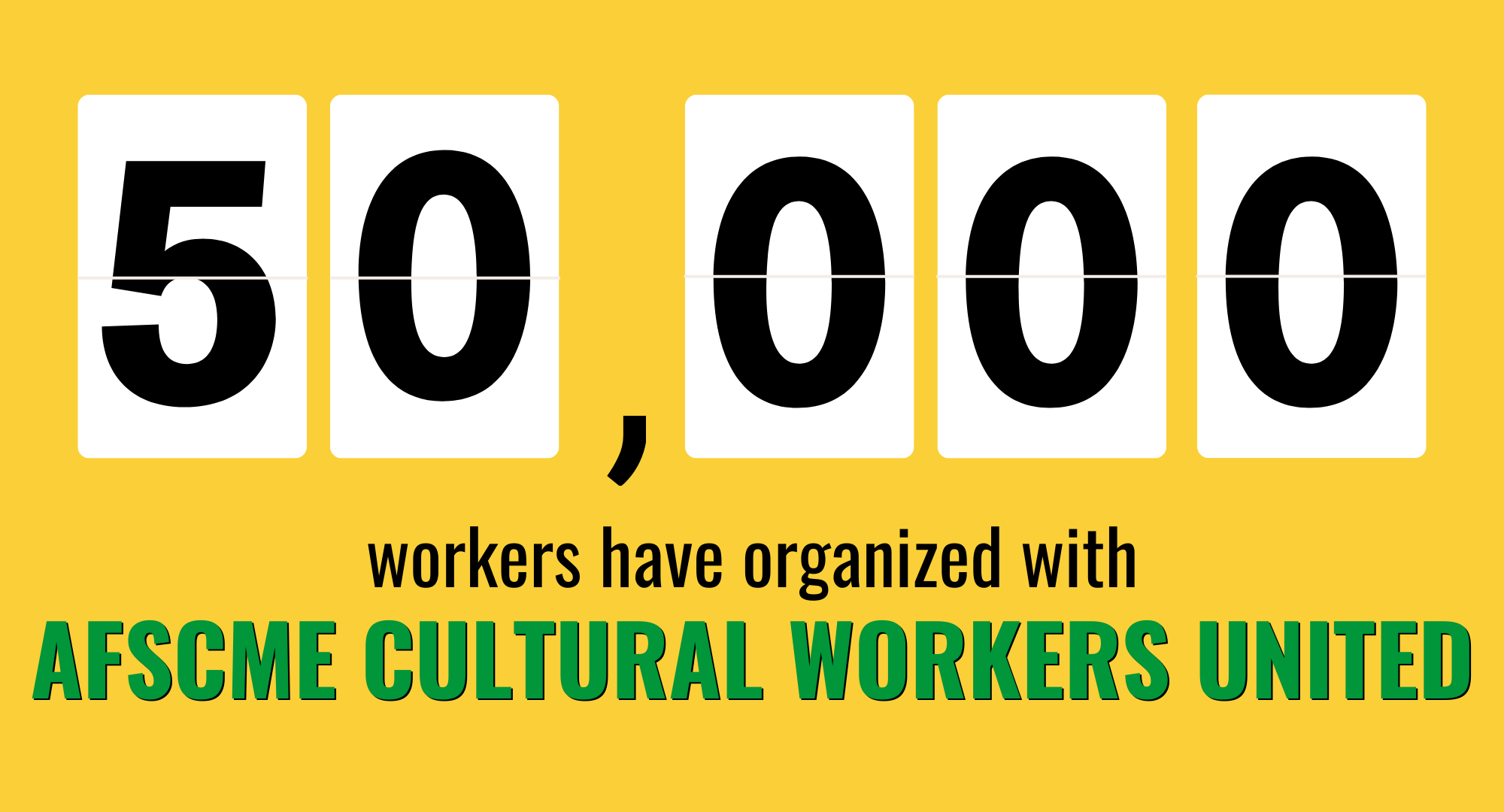
AFSCME Cultural Workers United hit a milestone this year. Fifty thousand workers at museums, libraries, zoos and other cultural institutions have won a voice on the job by forming a union with AFSCME — more than any other union.
Cultural workers have a long history of winning by organizing with AFSCME. For instance, workers at America’s library — the Library of Congress — formed a union through AFSCME District Council 20 in 1976.
But five years ago, as COVID-19 ravaged the world, cultural workers increasingly recognized the need to build power at work. The pandemic shone a light on long-simmering workplace issues and ignited an urgency among cultural workers to demand job security and a safe workplace.
The result? AFSCME cultural workers launched their Cultural Workers United movement.
From coast to coast, cultural workers joined together to address issues that had long plagued anyone trying to build a career in this sector. Dismal wages that were often viewed as concessions for working at prestigious institutions. Lack of accountability and transparency from management. And an overall exclusion of workers’ voices in setting workplace policies.
In recent years, thousands of cultural workers have formed new unions with AFSCME in big cities, small towns, and rural areas all over the country, from New York to California.
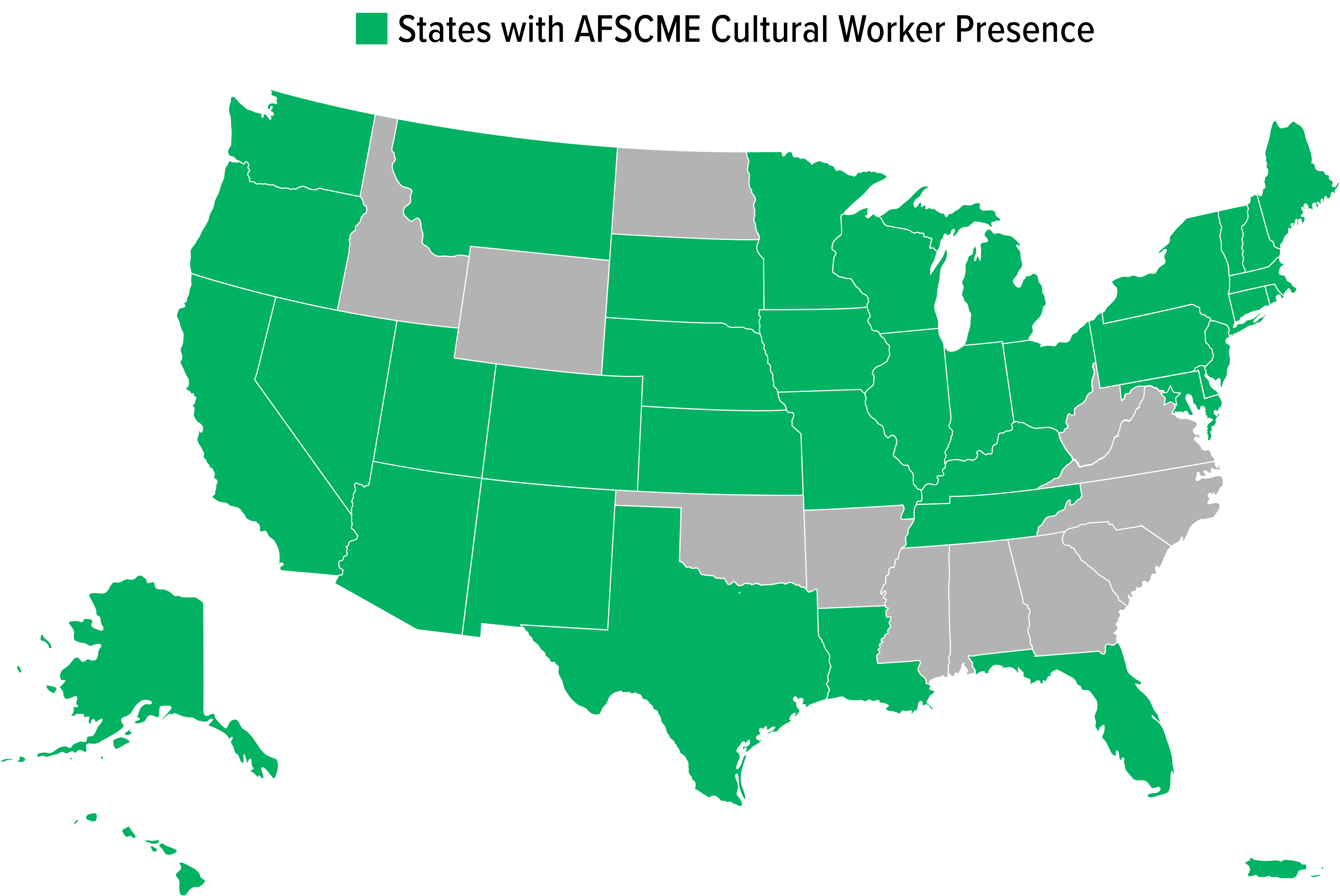
In states where local labor laws have historically restricted collective bargaining, AFSCME CWU members fought for their union freedom. Previously excluded library workers in Maryland, Colorado, Utah and Louisiana now have the power to collectively bargain.
AFSCME CWU is also making waves in cities like Philadelphia, where workers at the Philadelphia Museum of Art (PMA) gained national attention for their historic three-week strike that ended when workers secured a contract that met all of their demands. That included wage increases totaling 14%, substantial reductions to health care plan costs, four weeks of paid parental leave, and more.
And just a few states over, a boom of new organizing spread throughout Illinois. In just a few short years, 2,500 cultural workers from the Art Institute of Chicago, Museum of Contemporary Art Chicago, Field Museum, John G. Shedd Aquarium, Newberry Library and other institutions have formed their unions through Illinois Cultural Workers United-AFSCME Council 31.
PMA workers’ organizing success gave a boost to other museum workers in the city, and now workers at six cultural institutions have won their union with Philly CWU Local 397.
In California, the organizing fervor also took hold at modern art museums such as the Museum of Contemporary Art, Los Angeles, and expanded to other cultural landmarks like the Natural History Museum of Los Angeles County, where workers organized with AFSCME Council 36, and Monterey Bay Aquarium workers, who formed a union through AFSCME Council 57 earlier this year.
Meanwhile, in New England, Dartmouth College Library workers became the latest to join a growing legion of library workers who have successfully organized at higher education institutions. The group formed their union through AFSCME Council 93, which also represents library workers at Massachusetts Institute of Technology and the University of Massachusetts Library system. They joined AFSCME library and museum workers at Harvard, Princeton, Howard, the University of Maryland, and scores of higher education institutions across the country.
Many of these new unions have since ratified their first union contracts, which include gains such as significant wage increases, unprecedented contract and longevity bonuses, compensation for bilingual employees, improved job advancement and training opportunities, paid parental leave, and benefits that also cover part-time employees.
And even as the cultural sector faces relentless attacks from the current administration, AFSCME CWU is fighting back. That’s why AFSCME filed a lawsuit with the American Library Association to stop the administration from shutting the Institute of Museum and Library Sciences and protect funding for our cultural institutions. This case is making its way through the legal system.
Here are reflections of some cultural workers who have gained a voice through CWU:
“I’m so proud to be a part of the union that won our right to collective bargaining through the legislature. And I am so proud of the contract we achieved together. Our union fought to the very end to ensure we have strong protections against discrimination. Especially in today’s climate, where so many people are under attack simply because of their identity, having written protections is more important than ever. I know how important it is for my co-workers and me to have representation and power on the job, and that’s exactly what this contract gives us.”

Ryan Morris
Part-Time Hourly Information
Anne Arundel Public Library
AFSCME Council 3, Maryland
“Happy Anniversary CWU! As a founding campaign of the CWU movement, we fought relentlessly for a union that includes all of us. Museum management tried to divide us, but we proved we are stronger together! We now have a contract that substantially increases base pay and salary, includes step increases along with years of service, and secures yearly cost-of-living increases along with numerous new benefits. And we now have the power to advocate for the safety protections and respect we deserve. Our hard work is what makes the Walters such a vital part of the Baltimore community.”
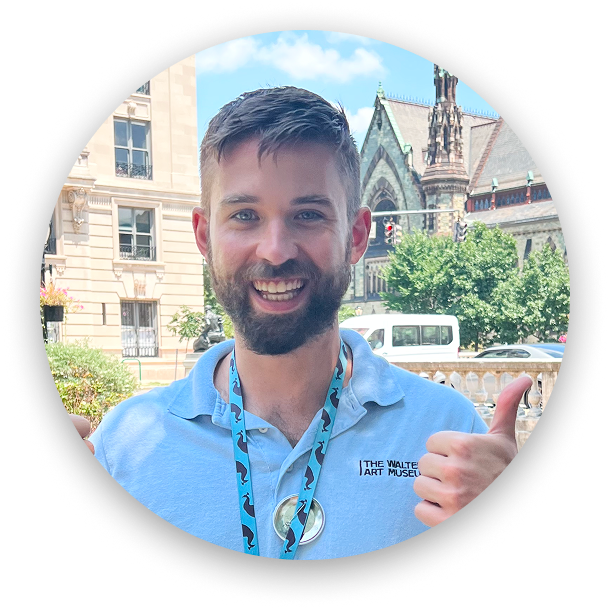
Garrett Stralnic
Public programs coordinator, The Walters Art Museum
AFSCME Council 3, Maryland
“It feels amazing to be at the first library in Colorado to unionize under the new collective bargaining law in the state. Unionizing has made the difference for me and my co-workers by giving us a strong voice in working with our administration. Before we unionized, issues raised by our workers usually were dismissed or barely acknowledged by management, and now we are seeing the power of having our concerns actually addressed in real time.”
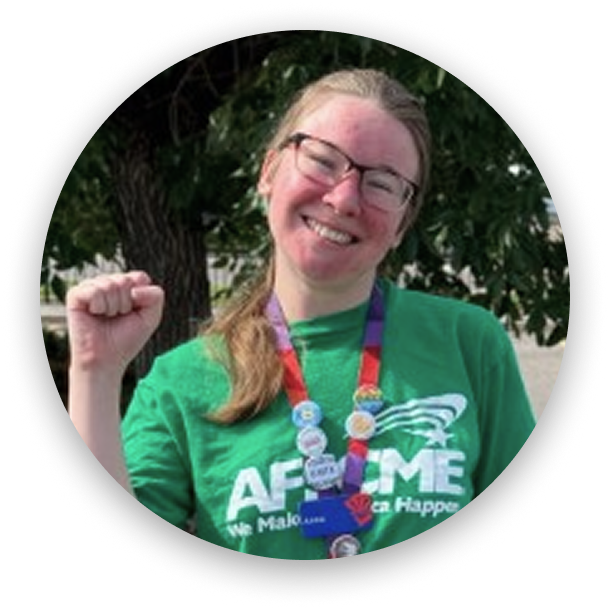
Anna Sparli
Public Services Associate
Jefferson County Public Library
AFSCME Colorado
“I’ve spent most my life working in libraries and museums because it’s something I love doing, but the low pay and working conditions have always been a challenge. The cultural sector needs unions and AFSCME CWU is ready to address that need. There are amazing cultural institutions throughout Colorado, and I’m immensely proud that Denver Art Museum Workers United is the first museum union in our state — and (the fact) that we won our election the same day as workers at Jefferson County Public Library sweetens the victory! Happy fifth anniversary, CWU!”
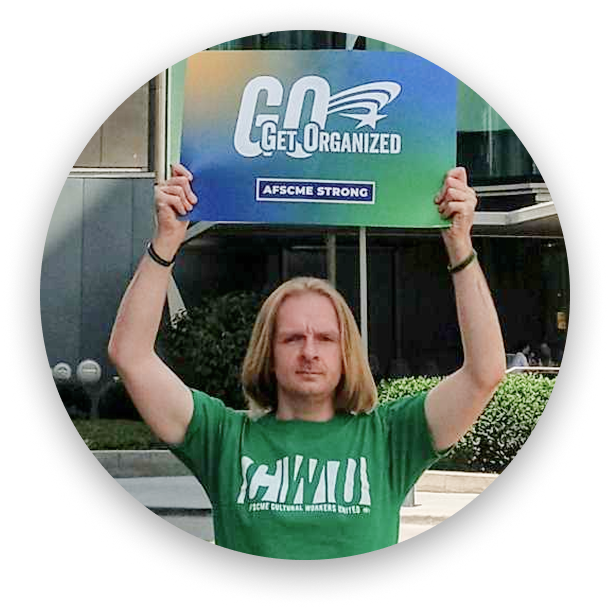
Sean Chase
Gallery Host
Denver Art Museum
AFSCME Colorado
“The victory for SLCPL Workers United marks a historic milestone for workers in Utah. As the first library union in the state, we are both honored and energized by what this means for the future of labor — both here in Utah and across the nation. We extend our deepest gratitude to AFSCME Cultural Workers United for their unwavering support throughout this journey. Together, we stand in solidarity with all cultural workers as we continue to advocate for fair wages, strong benefits, job security, and safe, inclusive workplaces free from discrimination.”
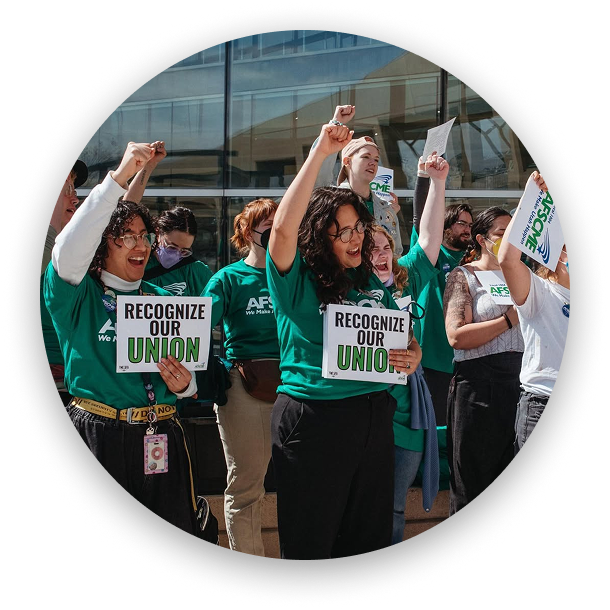
Christina Ordonez
Associate librarian
Salt Lake City Public Library United
AFSCME Local 1004, Utah
“Being able to watch people come together in solidarity with each other and fight for what we deserve was a unique experience that I’m grateful to have been a part of. I think that cultural work at its foundation is, and should be, about creating and serving a community, so forming a union feels like such a natural progression for cultural institutions. Having a union to stand by you and support you brings a sense of security and equity that’s hard to come by, especially in scary times, and we’re always striving to make it better. Every workforce that chooses to unionize helps us all work towards better workplaces and stronger contracts, as we continue to build off of each others’ wins.”
Djenn Schneck
Exhibits Tech
Please Touch Museum
Philly CWU Local 397 Chapter Chair
“Our first contract gave us a seat at the table with management, which is something we never had before forming our union. Some of the wins from our first contract include extending parental leave policy, more holidays off, and guaranteed annual increases for each year of our contract. I’m proud of the work we have done as a union and look forward to seeing what else we can accomplish!”
Dylan Bingham
Program Manager
Newberry Library
President of AFSCME Local 2877 (Council 31), Illinois