Rising costs and public service cuts: The real cost of the ‘Big Beautiful Bill’ one year later

When it was passed last year, the White House described the so-called “One Big Beautiful Bill Act” (OBBBA) as a “once-in-a-generation chance.” Just one year later, it’s clear they meant that it was a one-in-a-generation chance to enrich billionaires at the direct expense of working people and our communities.
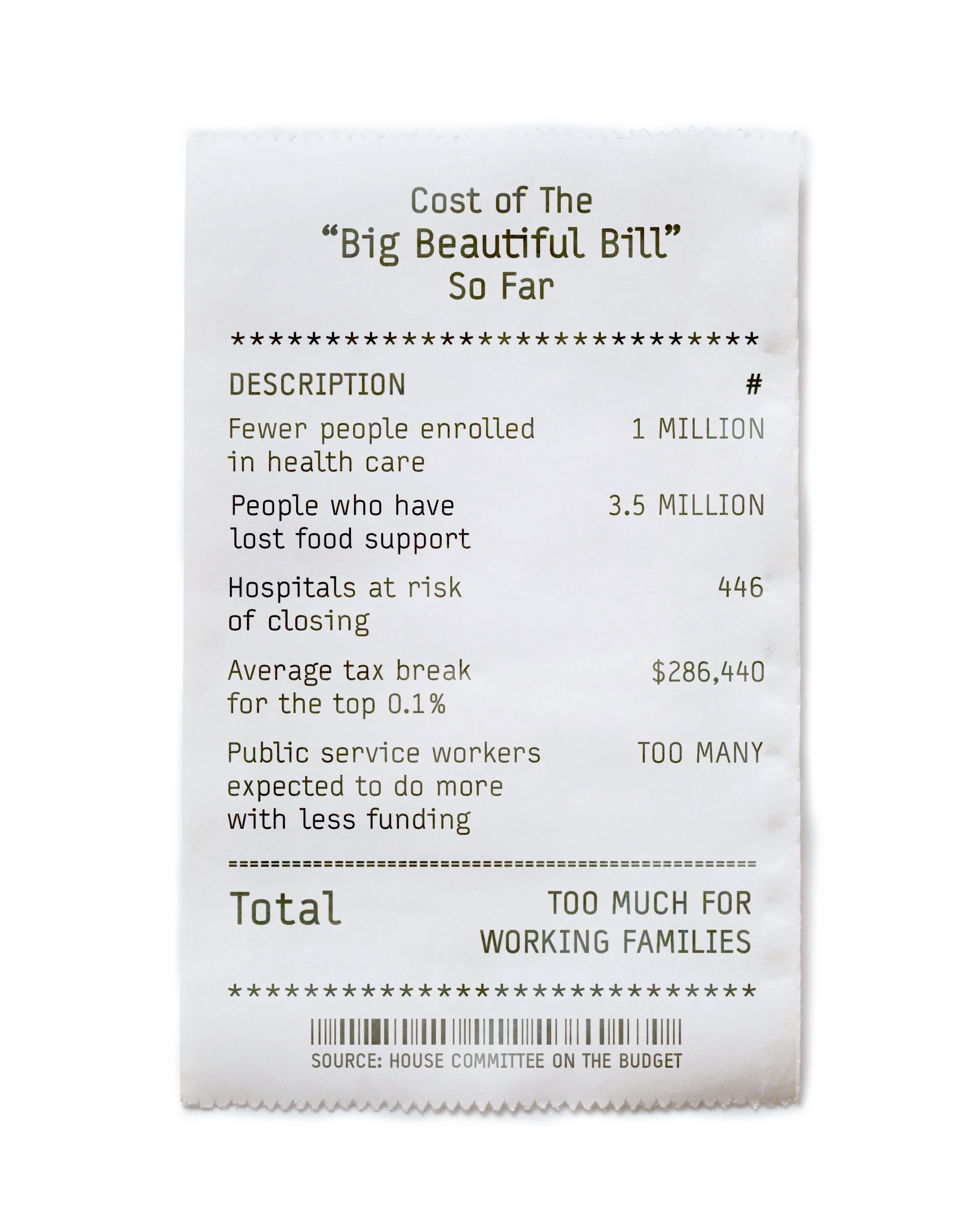
The bulk of the bill’s cuts have yet to take effect and already:
- 3.5 million people have lost food support;
- 1 million fewer people are enrolled in health care through the Affordable Care Act (ACA) as Americans struggle to afford care;
- 446 hospitals are at heightened risk of closing;
- More workers report struggling rather than thriving for the first time since Gallup began this polling;
- Public service workers are losing funding needed to do their jobs while being required to take on vast new responsibilities.
Meanwhile, America’s billionaires are doing better than ever after receiving tax cuts that used to fund health care, food support and other essential public services.
Their collective fortune has grown by 30% since Donald Trump was reelected. And Elon Musk just became the world’s first trillionaire. This is the same chainsaw-wielding guy whose “Department of Government Efficiency” is responsible for jeopardizing our Social Security data, weakening our disaster emergency response and contributing to public health outbreaks that are hurting farmers and food safety.
The billionaire tax cuts are so big and reckless that even with extreme public service cuts, they will increase the federal deficit by $4.1 trillion over 10 years.
With more cuts from this extreme anti-worker bill on the horizon, the urgency of the moment is clear: Workers must stand together and organize for change so we can protect our jobs and build thriving communities.
Keep reading to learn more about how the OBBBA is impacting AFSCME jobs and our communities.
Millions of people are losing health care coverage
The OBBBA got rid of the ACA’s enhanced premium subsides, which expired Dec. 31. These subsidies were helping more than 90% of ACA enrollees afford health insurance.
As a result, out-of-pocket ACA premiums have more than doubled on average. This sudden, sharp increase has forced about 1 in 10 people who were enrolled in ACA plans last year to drop coverage altogether. An additional 17% are at risk of doing the same.
Millions more are downgrading their care and cutting costs to afford it
Among those who re-enrolled in the ACA marketplace, many were forced to downgrade to plans with lower premiums but higher out-of-pocket costs. More than half of ACA enrollees this year told the health policy research organization KFF that they are cutting back on food or basic household items to cover the steeper premiums.
Fewer people on health insurance will drive up costs and worsen care for everyone
As people forgo health insurance, they will go without care until it’s too late, ending up in the emergency room, unable to pay. Visits to Indiana emergency rooms, for example, surged by 17% last year as the number of the state’s uninsured and underinsured climbed. That will force hospitals to raise rates to make up the cost of unpaid care, which in turn will raise costs for everyone. It will also lead to overcrowding and long wait times, making it harder for everyone else to get care in emergency rooms, too.
Families are going hungry
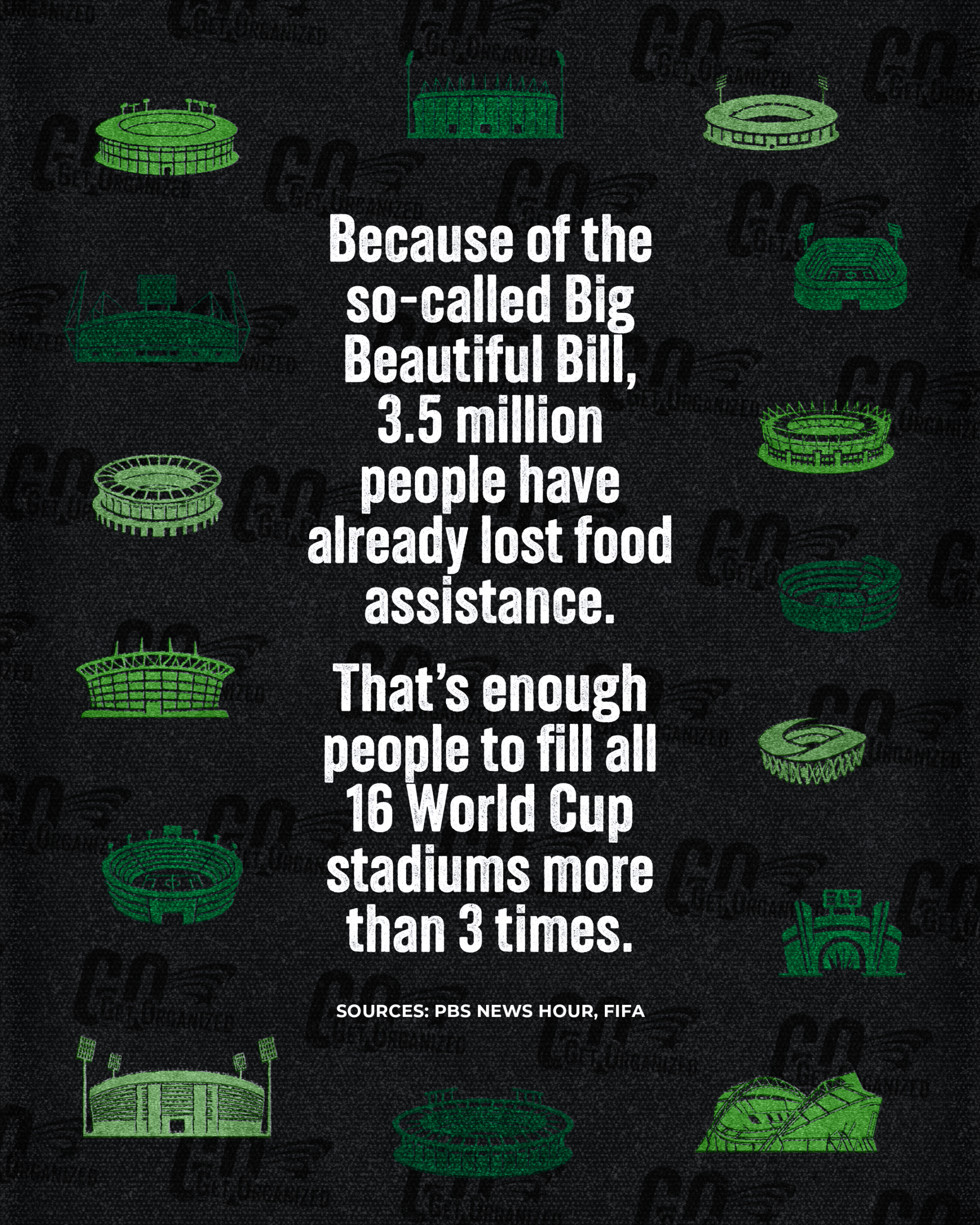
Within just seven months, more than 3.5 million people stopped receiving food support. The Supplemental Nutrition Assistance Program – also known as SNAP or food stamps – helps working families and people who are unable to work put food on the table.
In some states, the impact has been particularly brutal. About 50% of beneficiaries in Arizona’s food stamps program, including 200,000 children, have been pushed out.
The bill cruelly expanded SNAP’s strict “work requirements” even though most SNAP participants who can work do so. In effect, this bill is depriving people of food who might be unable to work due to family caregiving responsibilities or those in between jobs, like young adults transitioning out of foster care. It will also hurt children whose status for free and reduced school lunches is often connected to their family’s SNAP eligibility – all so billionaires can enjoy even bigger tax breaks.
Public service workers pushed to the brink
Altogether, these cuts put extreme strain on the public service workers who keep our communities running and mean that they’ll be asked to deliver the same quality of public services with fewer resources and less support.
Burdensome work requirements added to SNAP and Medicaid eligibility mean workers will have to spend more time navigating red tape and have less time on helping those in need. Social workers, school employees, library workers and many others will also be hurt as they serve families who rely on these critical, life sustaining programs.
The worst part is, that’s the goal of OBBBA, to kick people off the services they need to get by. This is why AFSCME members tried to stop this bill’s passage and why we’re fighting now to hold politicians accountable who voted for this Big, Ugly, Anti-worker Bill. Because our commitment to public services and our communities means we never quit.
Challenges Ahead: Extreme Medicaid cuts and more costs shifted onto states, straining budgets
After the midterm elections, the so-called “Big Beautiful Bill” is making the largest cuts to Medicaid in the program’s history. These cuts will leave over 7 million people without health care by 2034 and result in over 300,000 lost jobs, all to give more tax cuts to billionaires.
State budgets are already under strain because the OBBBA is shifting more SNAP and Medicaid costs onto them. At least six states — Colorado, Illinois, Maryland, Massachusetts, Nebraska and Oregon — have said that the bill’s funding cuts are likely to trigger big shortfalls. States will be forced to make hard choices about whether and how to make up for the OBBBA’s cuts.
Colorado announced a projected $1 billion shortfall, while Massachusetts said its revenue collections would fall by $700 million in fiscal year 2026.
To make up for loss of federal funding, state budgets for the Supplemental Assistance Nutrition Program (SNAP) will be forced to more than double under the new law, potentially forcing states to cut other programs and services.
State Medicaid budgets will see reductions of $665 billion by 2034, and state general funds will decrease by $86 billion just because of the law’s Medicaid cuts, according to a study published this year.
What can we do? Get Organized!
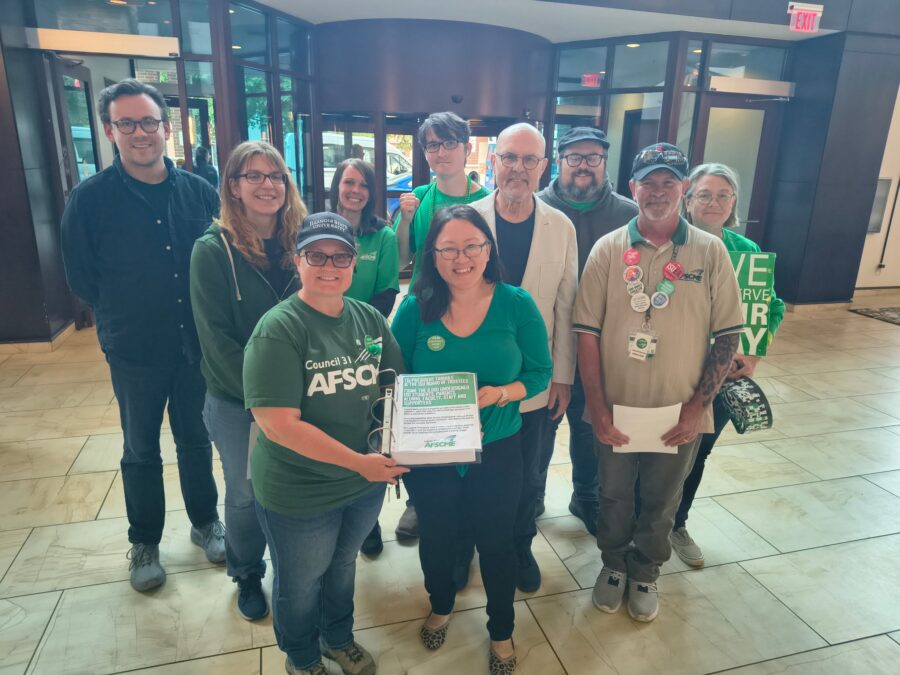
Organizing is how we protect the services our communities depend on and provide for our families. Across the country, AFSCME members continue to win respect and dignity on the job:
- Ending a four-week strike, Illinois State University workers won a new contract this year that gives them a fair return on their work so they can afford to provide for their families.
- In Ohio, primary care providers with Cleveland’s MetroHealth network are forming a union so they can have a voice on the job to improve patient care.
- In Dracut, Massachusetts, school custodians with AFSCME Local 1404 (Council 93) stopped a plan to privatize their jobs – an effort that not only is financially sound but also protects the quality of public services for kids in Dracut schools.
Sign up for GO Action Alerts