After decades of progress on narrowing the gender wage gap, pay is slipping again for women workers. That is, unless they belong to a union.
In 2024, according to the U.S. Census Bureau, the female-to-male earnings ratio fell for the second consecutive year. It clocked in at 80.9%, the lowest since 2016, according to the Institute for Women’s Policy Research (IWPR). That means women working full time, year-round in our country were paid 80.9 cents for every dollar a man earned.
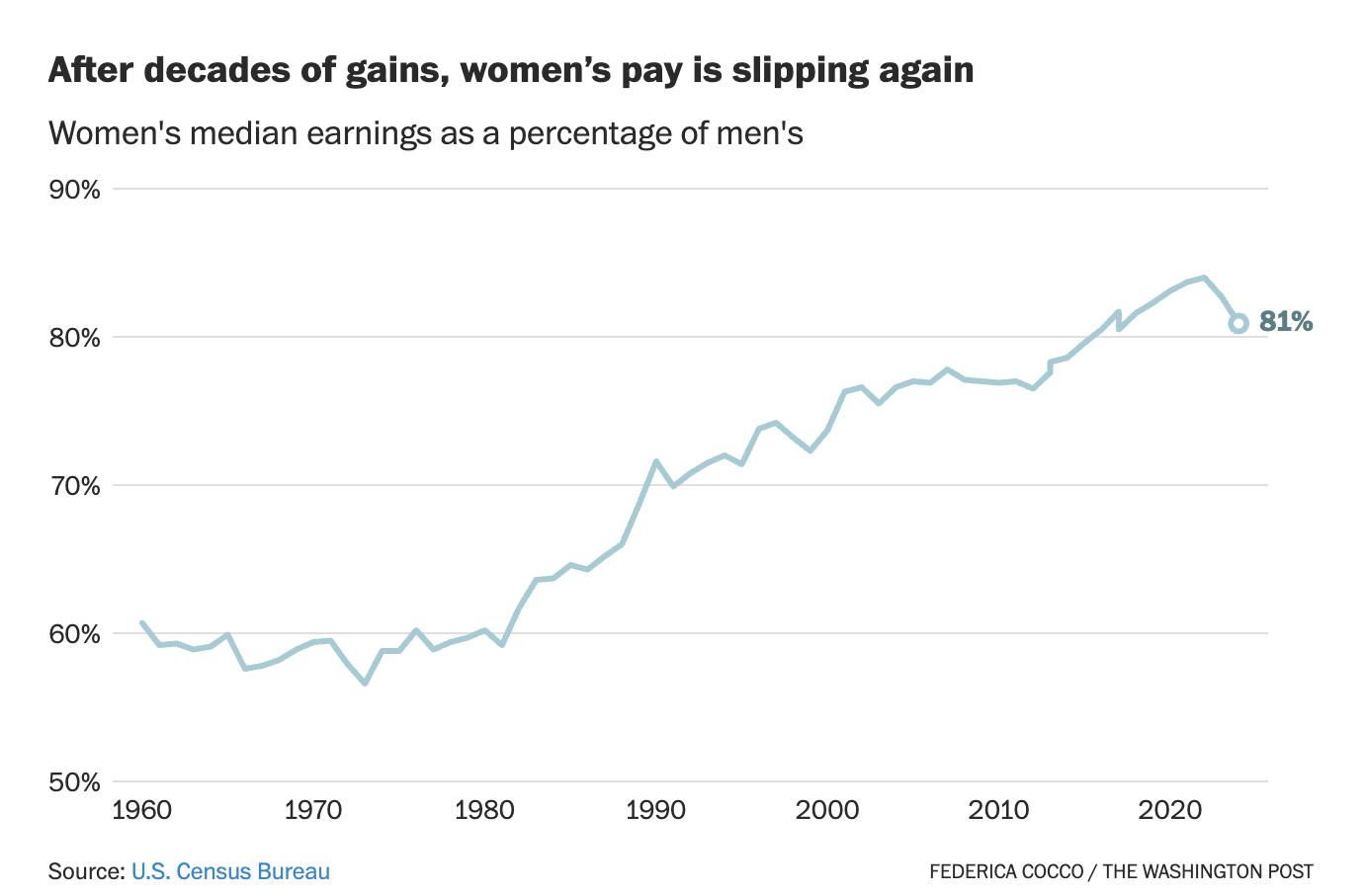
What seems just as concerning is that, as The Washington Post points out, this is the first time since the 1960s that the earnings gap between men and women has widened for two years in a row. According to the IWPR, the last time there was such a big drop in the earnings ration was in 1966.
But there is one group of workers who is protected from this trend: women who belong to unions. That’s the power of the union difference.

Why is the gender pay gap widening?
As the Post notes, researchers have identified several possible factors to explain the widening gender wage gap:
- Many more women than men are leaving their jobs as a result of return-to-office mandates, which are on the rise.
- Women assume more family responsibilities than men and are more likely to seek workplace flexibility, taking lower-paying positions as a trade-off.
- Child care is getting more expensive, and there are fewer affordable child care options for families.
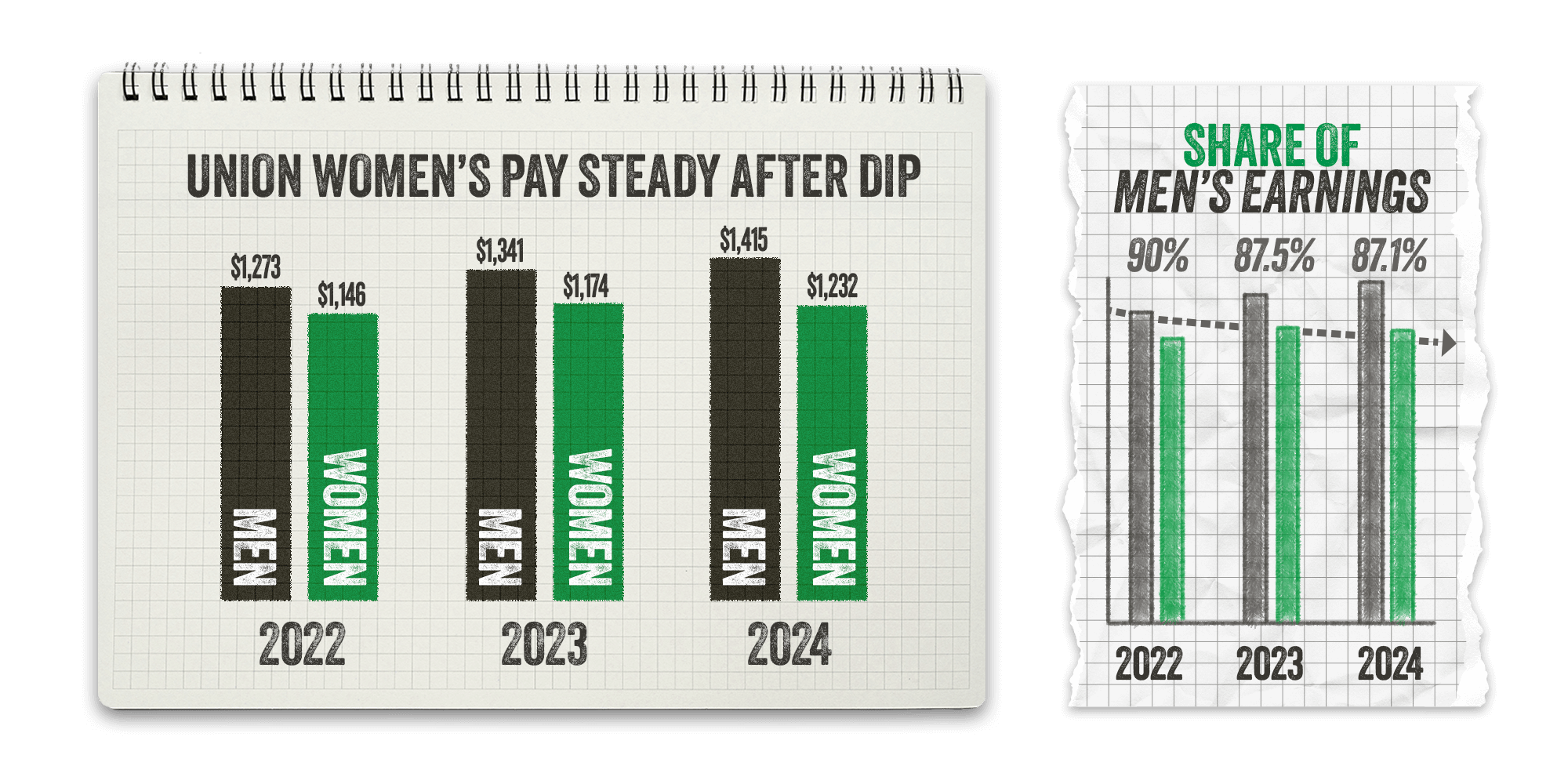
One thing is clear: Women workers represented by unions are bucking this trend. Over the past two years, the gender pay gap for unionized workers has barely budged.
The Numbers
To look at the gender wage gap among unionized workers, we need to turn to figures from the U.S. Bureau of Labor Statistics.
Although the gender pay gap widened a bit from 2022 to 2023, it held pretty steady the following year. Not only that, but women workers started with a much narrower wage gap than their nonunion counterparts: 90% vs. 82%.
“The facts and evidence are clear: union membership significantly reduces the pay gap between men and women.”
— Institute for Women’s Policy Research
The Union Difference
When it comes to the gender pay gap, it is significantly less for workers covered by union contracts.
But the union difference is not just about wages. It is about more than that.
As research by IWPR shows, “Women in unions have stronger employer-sponsored benefits: they’re more likely than other women to have an employer-sponsored pension or retirement plan, and more likely to receive health insurance from their employer.”
The union difference is about having a strong voice on the job. And a voice on the job means many things:— Institute for Women’s Policy Research
30%
$10K+
60%
How can joining a union help me?
Hear about the union difference from AFSCME members, in their own words.