For Tulsa workers, grit and solidarity lead to historic new contracts

Last year, AFSCME Local 1180 members who keep the city of Tulsa running were determined to prove that even a major city deficit could not stop organized workers from winning. This year, they made good on their promise.
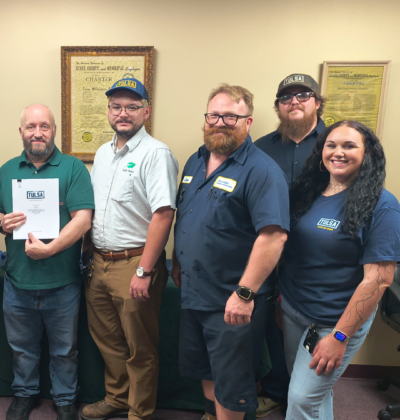
AFSCME Local 1180 members – whose jobs range from 911 dispatchers to chemists to sanitation workers – just ratified five new contracts. That includes a contract for their newest unit, Science and Tech, which joined AFSCME in 2025 and won its first-ever contract this year. The local won victories in a number of key areas, including wage increases, longevity pay, fairer pay schedules and more.
But their wins went well beyond wages; they also powered up their union strength.
“We left negotiations with more tools in our hands,” said Paul Stratton, lead horticulturist and chief negotiator. “Now, we take that power into the workplace.”
Through the work of Local 1180’s bargaining team, union time at New Employee Orientations (NEOs) tripled from 10 to 30 minutes. Additionally, union business may now be conducted on worksites.
Local 1180 members had previously been prohibited from visiting worksites to talk to workers about the power of belonging to a union, except during NEOs and a series of site visits provided last fall.
These historic breakthroughs give union representatives greater access to the workers they represent. That means more opportunities to answer questions, have conversations, and build solidarity. It means more empowered workers on the job.
Negotiations continued to bring historic gains when Stratton and his Labor & Trades negotiation team successfully closed a pay equity gap that workers have been raising with the city for nearly five years.
“We asked the city to show us the costs of everything,” Stratton said. “Then the answer seemed straightforward for everyone.”
Instead of accepting a straight 3% across-the-board raise, the team was able to address long-running pay inequities and deliver raises of up to 6%.
The same strategic negotiation showed up across units. For 911 dispatcher and chief steward Amanda Dunn, winning meant knowing when a proposal wasn’t good enough.
When management offered a package that would have required dispatchers to give up existing comp time in exchange for a small raise, Dunn reminded management that they were there to negotiate.
“We will not ask our members to give up an existing benefit in exchange for pennies,” Dunn told them. “We’re not taking that to them.”
The final agreement protected the unit’s 40-hour comp-time maximum while also securing a 3% raise and longevity pay.
For Tyler Strausbaugh, senior environmental monitoring technician and steward, the Science and Technical unit’s first contract meant building new relationships, identifying priorities, and engaging members throughout the process.
Strausbaugh and his negotiation team held one-on-ones with workers and identified longevity and specialized training as key concerns. Their first contract delivered both, along with a 3% raise, and was unanimously ratified.
“Members got engaged and really rallied behind their first contract,” said Strausbaugh. “Our unit saw one of the highest voter turnout rates!”
Local 1180 members championed better wages, career development, and historic access by growing their local union, fostering worker solidarity, and determination. Their success shows that when AFSCME members stand together, we win together.